

This post is by GO-GN alumni and scholarship awardee Dr. Vi Truong (Melbourne).
In August 2024, I had the opportunity to attend the International Symposium on Global South Studies 2024, hosted by Thai Binh Duong University in Nha Trang, Vietnam, from 19 to 22 August, thanks to the scholarship from GO-GN. I purposefully chose this conference as a unique opportunity to promote OER in an interdisciplinary setting that extended beyond the typical education-focused events. This symposium brought together a vibrant community of scholars committed to challenging Eurocentric perspectives and amplifying the voices of Global South researchers. Centred on the theme “Centralizing the South in the Global Context: Troubling What’s Known & Re-imagining What’s Unknown”, the event sought to disrupt mainstream discourses and foster critical reflection on established knowledge systems while envisioning alternative futures. Through interdisciplinary discussions spanning fields such as history, education, and cultural studies, the event facilitated meaningful dialogue and innovative collaborations to reimagine Global South studies. Key topics included Peace and Conflict Studies in Global Contexts, Human Rights, Social Justice in Education, Education and Identity, Community Development in the Philippines, Past and Contemporary Movements in Vietnam, AI and Society, and Minority Groups in Education.
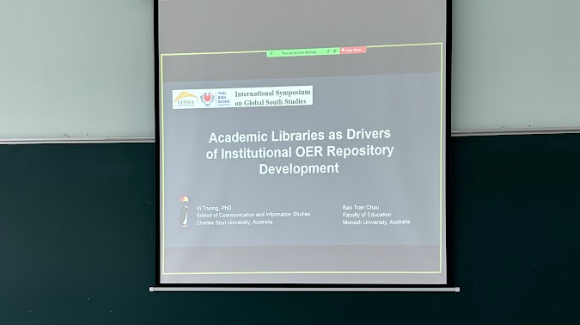
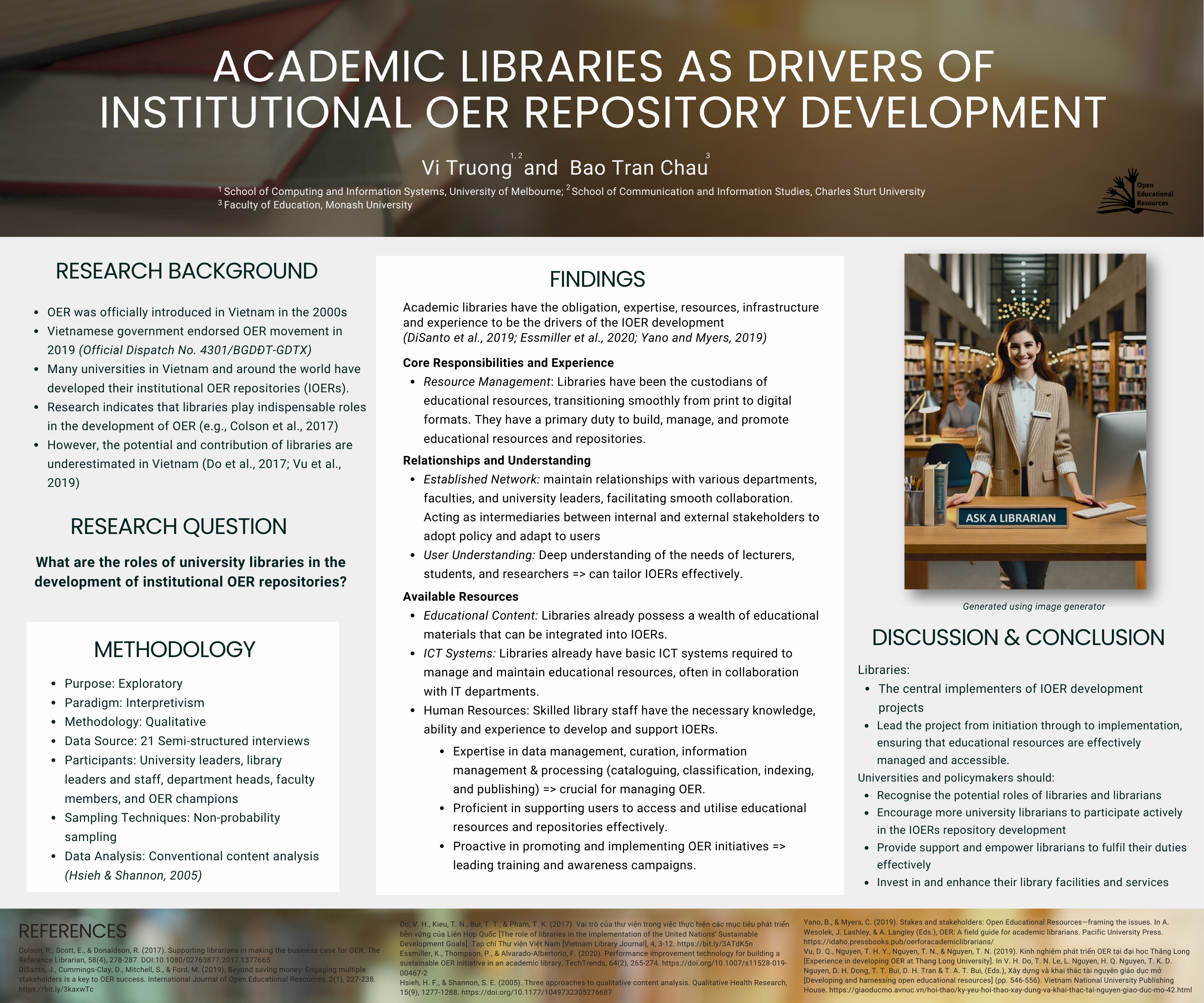
As an OER advocate, I aimed to leverage this platform to introduce the concept of OER and its transformative potential to a diverse audience. During the symposium, I presented my research, Academic Libraries: Drivers of Institutional OER Repository Development, which provided an invaluable opportunity to connect with scholars interested in fostering equitable education through open practices. My presentation highlighted how university libraries play a pivotal role in advancing the OER movement by contributing to the development of institutional repositories and empowering educators and students, particularly in underserved communities.
Choosing this interdisciplinary conference allowed me to explore how OER intersects with broader social and cultural discourses while engaging with a wider audience outside traditional education circles. Sharing this work was both humbling and rewarding, as it reaffirmed the relevance of OER in addressing global challenges.
For further details about my presentation, please see the poster below.
Promoting the GO-GN Network
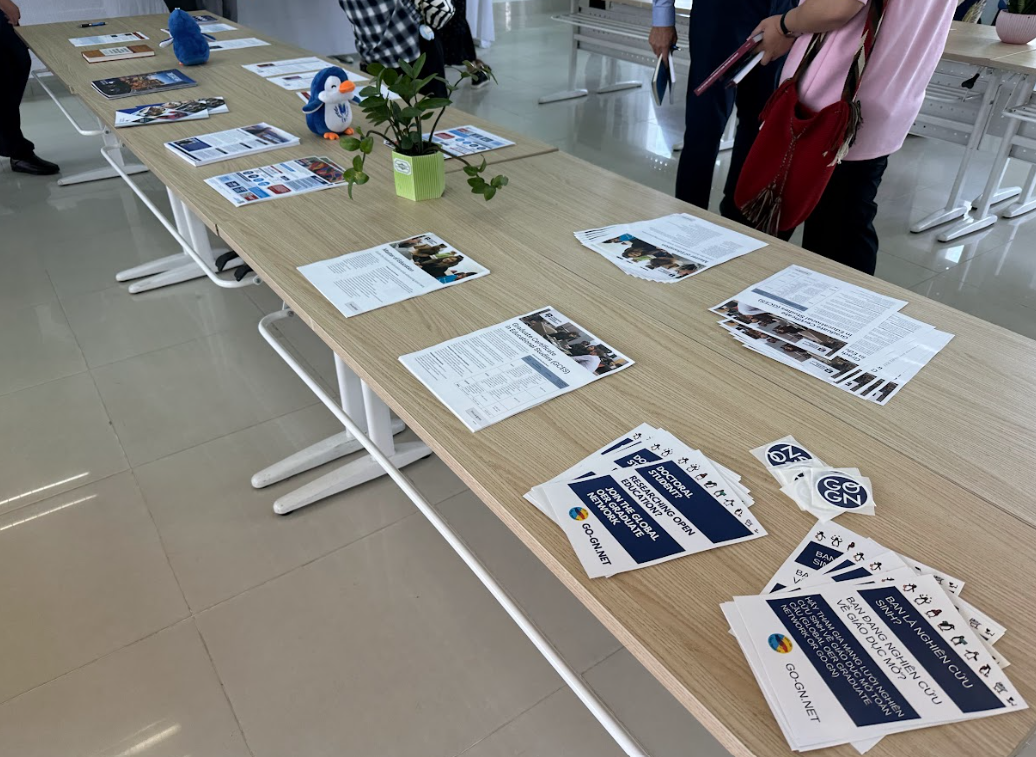
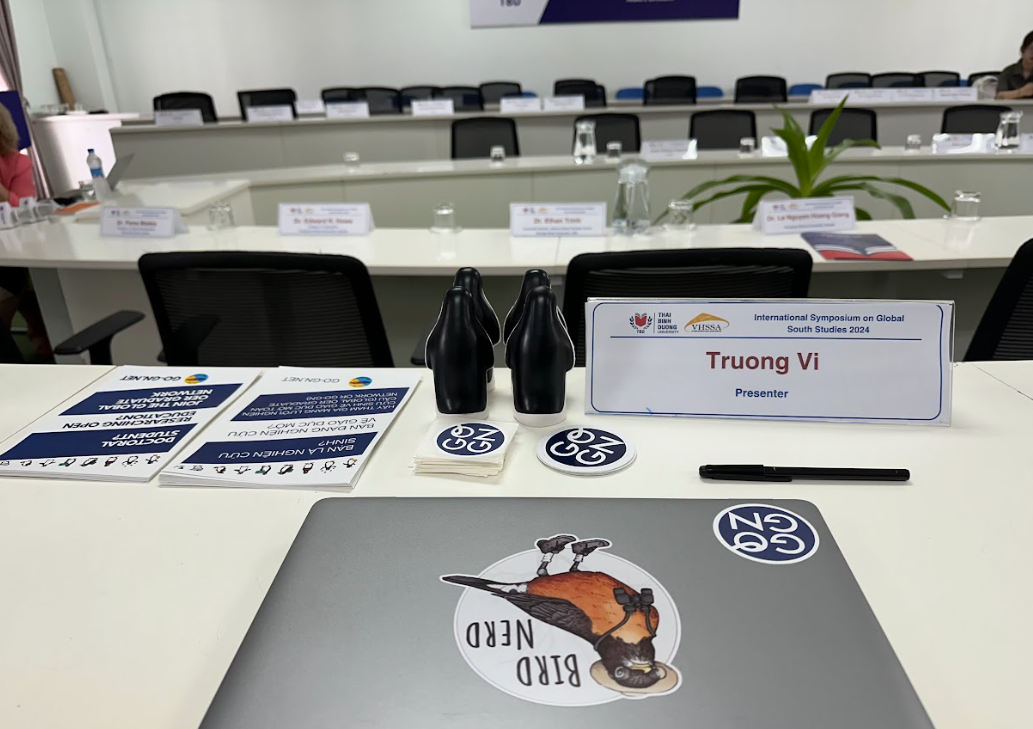
Additionally, one of my primary objectives at the conference was to promote the GO-GN network and encourage attendees to engage with the global OER community. I actively introduced the network to both Vietnamese and international colleagues during my presentation and informal discussions at coffee breaks. These interactions provided a valuable opportunity to answer numerous questions about the network’s mission and its role in supporting OER research students worldwide. Attendees showed great interest in the GO-GN leaflets, penguins, and stickers, which helped spark further curiosity and engagement. I hope these conversations not only inspired attendees to explore and contribute to the OER movement but also motivated them to actively promote the GO-GN network within their own academic and professional communities.
Promoting Open Education: My Guest Lecture on OER in Indonesia
One significant outcome of the presentation and discussion with participants at the conference was an invitation to deliver a guest lecture at the Indonesia University of Education in November 2024, titled Exploring Open Educational Resources (OER): Empowering Educators and Learners. Delivered via Zoom to an audience of hundreds, including students and staff from the university, the lecture focused on:
- The concept of Open Education, OER, and their significance.
- Creative Commons (CC) licenses and their role in enabling resource sharing.
- The transformative potential of OER for educators and learners.
- Practical methods to find and use OER, alongside international OER initiatives.
- Opportunities to engage in global OER events and communities.
This lecture not only underscored the critical role of OER in fostering equitable access to education but also served as a platform to advocate for its broader adoption among educators and students in the region. During the lecture and the subsequent discussion, I received many insightful questions from the audience. For example, participants asked how to overcome language barriers in OER, or how educators could contribute to creating OER materials.
This lecture is a testament to the impact of the GO-GN scholarship, which promotes OER and open education by creating opportunities for meaningful engagement and knowledge-sharing. I hope that more GO-GN members will have the chance to benefit from this scholarship, enabling them to attend conferences and organise events that amplify the values of openness. Initiatives like the GO-GN scholarship can continue to ignite interest in the open movement, inspire broader participation, and actively contribute to advancing OER adoption on a global scale.
Reflections and Gratitude
Attending the symposium was a deeply enriching experience that highlighted the power of collective knowledge-sharing and collaboration. It was an honour to contribute to this vibrant community of scholars while championing the values of openness and inclusivity through OER. Many students and researchers expressed a keen interest in the open movement, and I was grateful for the opportunity to answer their questions to the best of my knowledge. I am hopeful that these interactions will inspire more OER advocates from the Global South, paving the way for increased adoption of OER in the region. This experience also reinforced the importance of attending non-OER or education-focused conferences to promote OER and the open movement more effectively. Engaging with interdisciplinary audiences allows me to introduce the concept to those who may not be familiar with it but are open to exploring its transformative potential. The interest and enthusiasm I witnessed at the symposium reaffirmed that discussions about openness resonate across disciplines and contexts.
I am deeply grateful to GO-GN for their support, which made this opportunity possible. I look forward to continuing to advocate for open education, ensuring its benefits reach more educators, students, and communities worldwide. I am also actively seeking more opportunities to promote OER and the GO-GN network to new audiences, further amplifying the impact of the open movement. As we navigate a rapidly changing global landscape, the principles of openness and inclusivity are more critical than ever. By fostering collaboration and knowledge-sharing, we can empower learners and educators worldwide to embrace the transformative potential of OER. I encourage others to join this movement, explore the resources available through GO-GN, and seek opportunities to amplify the impact of OER. Together, we can build a more equitable and accessible future for education.
Photo credits: Vi Truong (used with permission)
