

This post was written by GO-GN scholarship recipient Angelica Janeth Cortez Soto, PhD.
University students who have experienced Adverse Childhood Experiences (ACEs) often navigate higher education without targeted, accessible support. While the research on ACEs and their long-term impact on learning, wellbeing, and academic performance continues to grow, few resources translate that evidence into practical, openly available tools for students and educators who are already dealing with those consequences. That gap was the starting point for this project.
The Project
With the support of the GO-GN scholarship, I developed Resilience After ACEs — a bilingual (English and Spanish), self-paced open educational resource designed to foster academic resilience in university students with high ACE exposure. The OER consists of six modules and 39 lessons grounded in trauma-informed pedagogy and resilience research. It covers areas including the neurobiological impact of adversity, emotional regulation, identity and personal agency, relational patterns, and executive function strategies for academic success. The full resource is openly available under a Creative Commons Attribution 4.0 International License.
Developing it bilingually was a deliberate choice. Much of the ACEs literature is produced in English and within Global North contexts. A bilingual OER allows the resource to reach Spanish-speaking students and educators across Latin America, where both the need and the interest are significant but accessible materials remain scarce.
Recognition
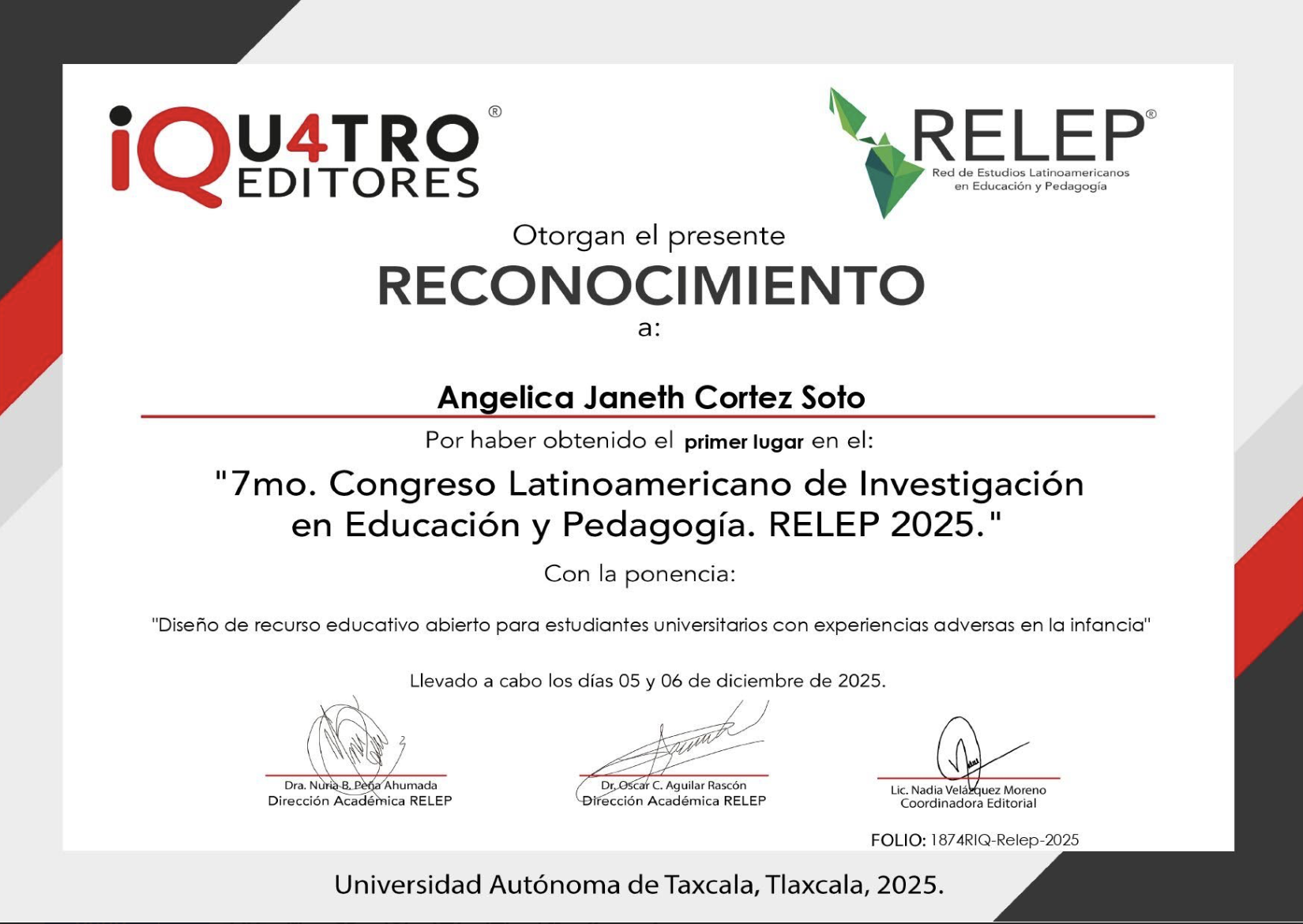
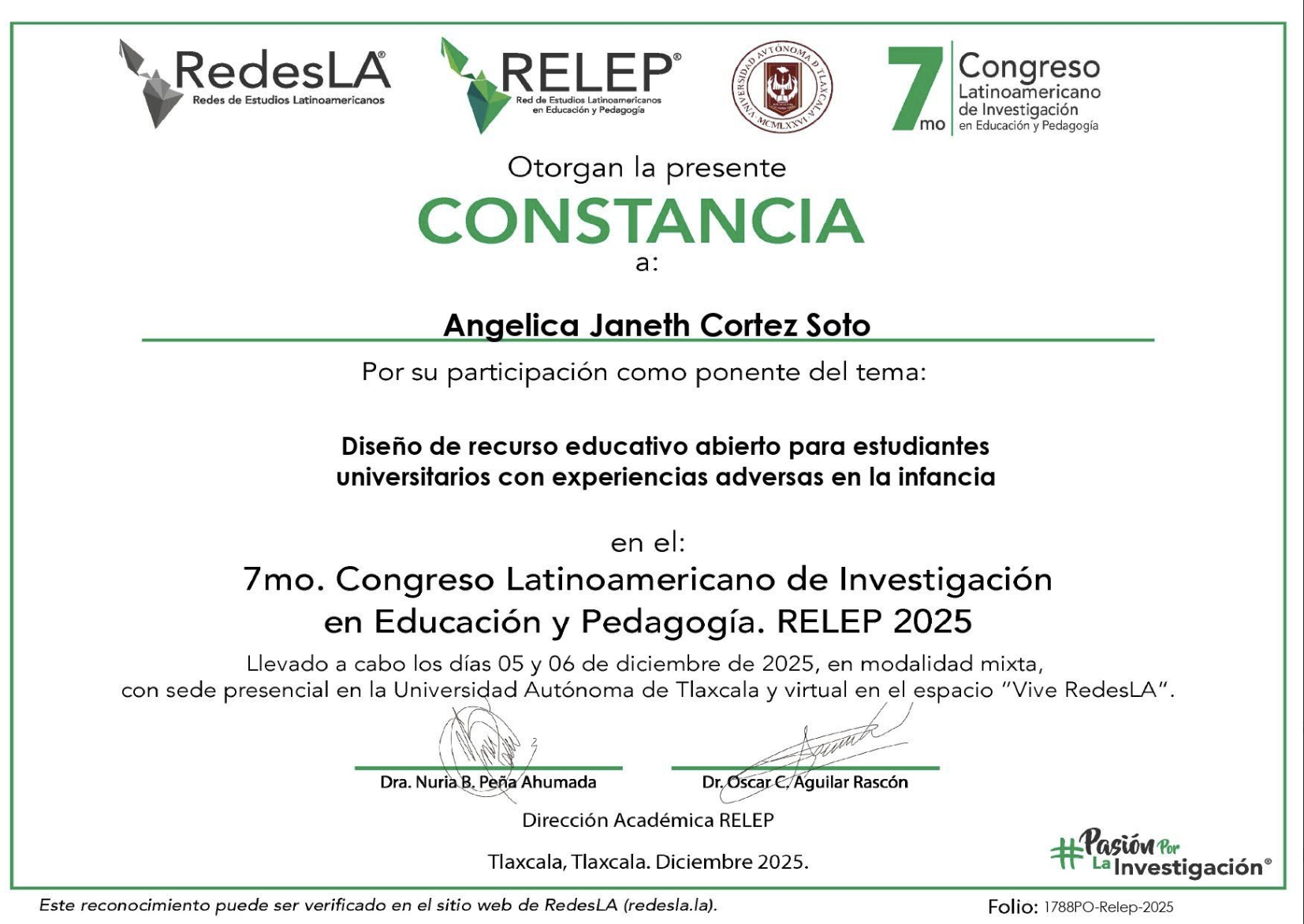
As part of the project’s dissemination strategy, I presented the paper Designing an Open Educational Resource for University Students with Adverse Childhood Experiences at the 7th Latin American Congress on Research in Education and Pedagogy (RELEP 2025). The paper was awarded First Place — iQuatro Editores Award for Best Paper. The official announcement can be viewed here. The presentation drew significant interest from attending faculty, many of whom were encountering the topic of ACEs for the first time — a response that confirmed both the relevance of this work and how much awareness is still needed within the Latin American education community.
Reflections
The GO-GN scholarship gave me the structure and support to develop a fully realized resource that students can actually use. What I value most about the GO-GN network is precisely that orientation: open education is not just about making content free, but about making knowledge genuinely accessible to the communities that need it most.
Building this OER also reinforced something I have come to see as central to my work: that trauma-informed and culturally responsive approaches are not optional additions to education — they are essential infrastructure, particularly for students whose early experiences have shaped how they learn, relate, and persist.
What Comes Next
The OER is now publicly available for use by educators, students, and institutions. I am currently exploring opportunities to continue working in education that improves people’s lives — and open education is one powerful way to do it. I am also continuing to develop publications from this work and welcome collaborations with others in these communities.
I will share links to forthcoming publications as they become available. In the meantime, I invite anyone interested to explore the resource at https://www.resilienceafteraces.org and share it with students and colleagues who might benefit.
I am deeply grateful to GO-GN for making this project possible.
Photos of the RELEP 2025 conference in Tlaxcala, Mexico provided by Angelica Janeth Cortez Soto, PhD.
